Fantasy Analyst I: Nihilism
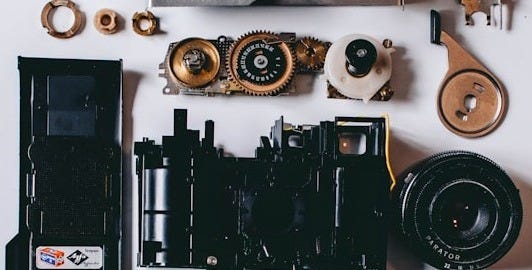
Take it apart, find the broken piece, put it back together better than before

I read somewhere that A Song of Ice and Fire by George RR Martin was marketed in the mid-1990s as “fantasy for those who hate fantasy,” or something of that ilk. It shows, having become the godfather of grimdark, a subgenre of fantasy whose readers have boiled off all their wonder to become gluttons for pain, shock, and high-contrast realism. And thanks to smart marketing and generous word-of-mouth evangelization since the HBO series reared its spoiled, lewd head, this strain of fantasy has become the public face of the wondrous genre won back by JRR Tolkien less than a century ago. This may soon shift yet again in a different flavor of lewdness and spoiling, captained by the likes of Yarros and Maas toward smut or Baldree and Klune toward smothering coziness. Yet this is not new: fairy tales have long since fallen prey to bowdlerization at the hands of Disney, to famous and unbudging effect.

You and I don’t need to become fantasy historians or PhDs to look around at the genre’s landscape and see something wrong. We know what to do about it. The riddle is overcoming the looming odds and blockades along the way to redeeming this wonderful genre.
I am, by trade, an analyst, and I mean to turn such skills toward the fantasy genre, but not just for the sake of picking something apart. I have also worked as a carpenter and locksmith, so for the sake of building it back I mean to discard the broken and fit better parts in their place.
The first broken piece is nihilism. Its history stretches at least hundreds of years back, oozing from faithless, envious hearts like a leaching septic tank. It is a sophomoric philosophy at best, and its users look with glee down their noses at a child’s hope. No one is born a nihilist, but many grow jaded when their view of the future skews in a direction they don’t like. They fantasize about defeat and meaninglessness, and while they do not all flock to the grossest forms of debauchery and violence at all times, this hopelessness blooms in failure, despair, and vengeance.
What a terrible dream. Nihilists might say that it’s better not to dream, or, if you do dream, dream about wringing wine and blood out of the tapestry of time. Yet fantasy is a dream, an otherworldly game board upon which to pit oneself against the evils of the world and win, by grit and by bonds with others. We should go into this dream and awake stronger than before, not come back up to soothe our aching lungs.
I then ask myself, “What is the opposite of nihilism in fantasy, and is it the way?” The opposite of nihilism in fantasy is Care Bears and Animal Crossing: low stakes, high optimism, coziness cranked to the highest setting. This is why the pendulum of the market swings to the other end, as far away as possible from the Lords of Grimdark. Yet why would anyone choose to stay in a tea shop or linger in the Shire tilling the ground when a massive threat and adventure lay waiting just down the road? So what seems like the opposite of nihilism turns out to be another mere form of defeatism.
Tolkien admired the “northern courage” displayed in the Völuspá, the foretelling of the death of the Norse gods in Ragnarök, as a means to let resolve and strength of heart shine through looming doom. In Tolkien’s works, however, he dismantled this noble despair and fit it back together with different parts, calling it “eucatastrophe,” in which total ruin reveals a sudden spark that fires the landscape in a blaze of hope and victory. Eucatastrophe is rooted in Christian eschatology, and it is a Christian redemption of noble Norse pessimism. It is the antidote to nihilism, because while it recognizes the truth of bitterness, wreckage, and woe in the world it does not walk into the abyss but toward the sunlight that yet rises.
Whereas the high stakes and shocking twists may make for an exciting ride through a gripping, brutal fantasy story, readers and writers of new stories need to mull over the bigger question: what are we fantasizing about–torture and pain, or great feats of the will? If the former, let’s take a step back from the Pit of Despair and consider the whole outlook of human life. If the latter, let’s spend our time on better stories that lift our eyes.